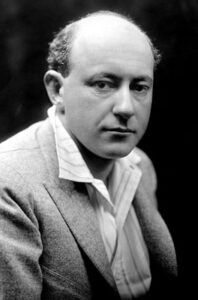
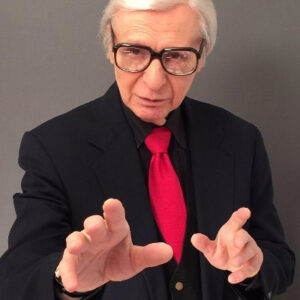
NORMAN STAHL has a wonderful way with words. He can
charm you with an anecdote or impress you with his wit.
In his former career as creative director of Ted Bates
Worldwide, in charge of such accounts as Prudential, HBO, Pepsi-Cola,
Dodge and Colgate Palmolive (remember Madge soaking her clients' hands
in dishwashing detergent?), this proved an indispensable gift.
Those who have watched him practice his second career as
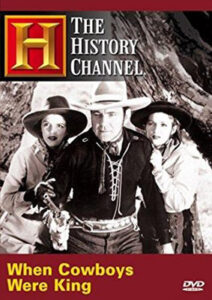
the executive creative director, writer and researcher of more than 100
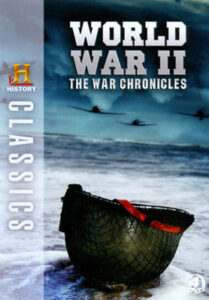
documentaries on the Arts and Entertainment network and the History
Channel say he has applied this instinct to his present calling, with
proven results.
In 1985, Mr. Stahl traded 30 years of a three-hour-a-day
commute on the Long Island Rail Road for working at home, swapping
files from his computer with his co-workers 150 miles away. Along with
a producer, Lou Reda (''a super peddler, a man of whom it has been said
has the power to clog men's minds''), and a line editor, Sammy Jackson,
Mr. Stahl is responsible for up to 10 percent of what is produced on
A&E and the History Channel. Exchanging the bright prose and snappy
slogans of the advertising world for hard facts, he selects and
arranges those stories that record the nation' greatest triumphs and
disasters.
There is a not-so-obvious transfer of skills between a
career in advertising, where a good word has always been ''new,'' and
historical research, where the goal is revealing the truth. Both jobs
deal with orchestrating dreams and desires into compelling and
memorable experiences for the audience. And although both demand color
and emotion, their creator must fade into the background or risk
competing with the material.
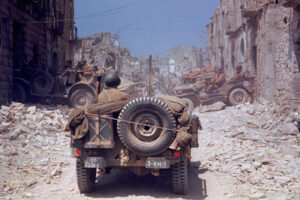
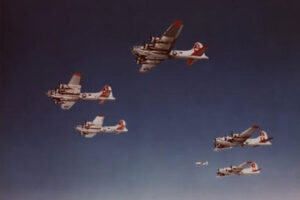
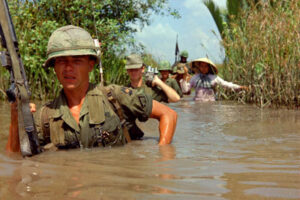
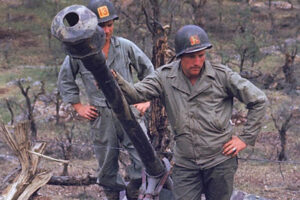
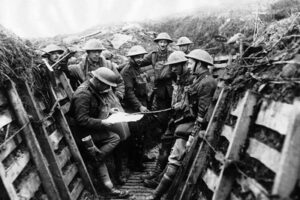
So much of history is the history of war and Mr. Stahl
has written shows about their battles, from Shenandoah to Okinawa to
Desert Storm, as well as a 13-part series on their weapons. He has
profiled World War II heroes, from Omar N. Bradley, Douglas MacArthur
and Dwight D. Eisenhower to Chester Nimitz, George Marshall and George
Patton, and created programs on the history of the United States Horse
Calvary, the Naval Academy and the Marine Corps.
In addition, he has researched the biographies of more
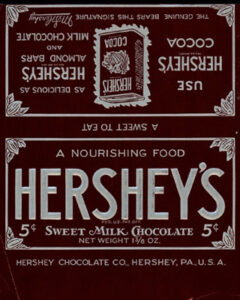
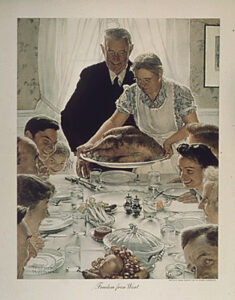
peaceful types like Milton Hershey, Dow Jones and Norman Rockwell. In
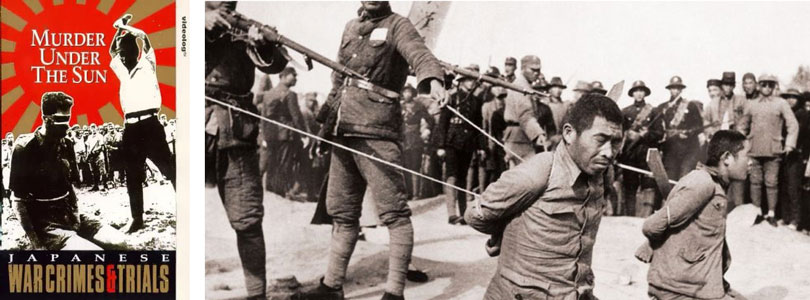
the works are projects on the 1918 flu epidemic, the U.S.O,, and the
''Rape of Nanking.''
The output of this production team would be impressive
for a crew twice its size and half its age. ''This is sort of like a
dream for us,'' Mr. Stahl said. ''You see so many people coasting
downward. It feels good to be coasting upward. Lou Reda and I are
essentially a couple of guys who don't have to work anymore but love
what we're doing. We do what we have to do at speeds no one would
believe. We completed 17 hours [of programs] last year, and we're
already booked well into next year.
''After working deadlines for 30 years, writing is like
breathing. A one-hour script is about 45 pages. We know the format, the
elements we need, who we have to call and the questions we want to ask.
I walked away from a three-book contract because this is so much
fun.''
Mr. Stahl was born in the Gravesend section of Brooklyn
66 years ago. His B.A. in English from Brooklyn College helped land him
a job as a copywriter at the Manhattan advertising agency of BBD&O.
Then he moved to Ted Bates, where he wrote some of the most popular
television commercials of the next two decades.
In his ''spare'' time, he managed to write four novels.
Mr. Stahl has lived with Flaye, his wife of 41 years, in the same house
in Bay Shore since 1961. They've raised three sons and have five
grandchildren, all living 10 minutes away in Islip. (''That's why we're
not in Sedona or Pebble Beach,'' he said.)
''I started out as a journalism major,'' Mr. Stahl said.
''I was very good at writing the who, what, where, when, why sentences
with no adjectives. But I slowly found out as I got into advertising
that if you wrote a bit more purple, you got a bit more money, and if
you wrote a lot more purple, you got a lot more money.''
In contrast to the advertising business, which he
described as ''a bunch of old dinosaurs still doing things the way they
did in 1511,'' the people at A & E and the History Channel ''are
young and smart and nice.''
There would be no more projects, he said, ''where only
the phone company and the restaurants get rich.''
Each show takes about a month to get it all written, no
matter if it's an hour or two hours long.
''It doesn't take any more time to do a two-hour show,''
Mr. Stahl said. ''In fact, in many ways, it's easier. You do the same
amount of research and you don't have to throw things out to get it
down to an hour. Good sources are key. I try to arrange questions so
that the whole story can come out of the mouths of the people I'm
interviewing. Before we even have these heads, I generally write the
show all the way through with the idea of plugging them in. I know
where they belong and how long the pieces should be. When I've done
that, I give it to the production people to begin finding material. Our
researchers use Reda Production's archives in Easton, Pennsylvania, as
well as the National Archives and other sources to gather what we'll
need, Each of us has absolute say over our part, and we'll meet maybe
once a month.''
Mr. Stahl created three different work areas at home,
all surrounded by books and tapes and photos. ''Sometimes, I sit with
my laptop out in the gazebo, waiting for the muse to bite me on the
ankle,'' he said. ''I stopped work for a little while when I left
Bates, but I found I could only hit so many 7 irons. Now I work as much
as I feel like. It's almost too good to be true. I can just about say,
'Who do I want to meet?' I get to work with people like Stephen
Ambrose. I've had a chance to meet all my World War II heroes. All
these guys I thought were dead a hundred years ago are still as sharp
as tacks.''
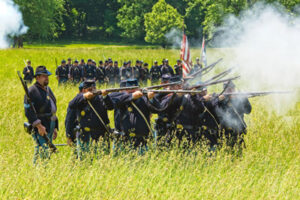
Mr. Stahl and company also travel to where historical
celebrations are taking place. ''We found out that a key battle of the
Civil War, the Battle of Cedar Creek, was being re-enacted with a cast
of 5,000,'' he said.
''To be on the battlefield filming, you had to wear a
uniform. I got to be what I always wanted to be, a Confederate calvary
officer. And just a few months ago, we went to Blydenburgh Park to film
a Rough Rider re-enactment group relive the Battle of San Juan Hill,
complete with Gatling guns, Hotchkiss guns and dying Spaniards.''
Mr. Stahl is constantly aware of history's role in
widening people's thinking, deepening their sympathies and disciplining
themselves.
Quoting Edmund Burke, he said: ''It's a pact between the
dead, the living and the yet unborn.''
''History is so dead in this country,'' Mr. Stahl
continued. ''When you talk about F.D.R. and Winston Churchill, you
really have to tell people who they are. However, the History Channel
is a runaway, amazing, surprising success. People are getting hooked on
history. A & E has an educational channel that goes out to the
schools, and all our stuff is made available to them. It's very
exciting to watch as kids see the interconnections and discover that
the world didn't start last Thursday.
''Our transcripts go to the archives and will become
original source material for a guy doing research 75 years from now,''
he continued. ''For those of us who have seen a lot of sunrises, this
stuff is going to be around when we're in urns on the
mantelpiece.''